Tuesday, December 08, 2015

A Christmas Meditation: Mary the mother of Jesus


A Christmas Meditation

Mary the mother of Jesus


We can easily become over-familiar with the Christmas story and forget how amazing it is.

Take Mary, for example. We don’t know how old she was when Jesus was born. All we know is that she was a young woman. In the culture of the Middle East at that time, people married very young. Mary was probably a teenager when the angel came to her, and she may have been as young as 14.

It’s not surprising that when the angel came to her and greeted her –  “Greetings, you who are highly favoured! The Lord is with you!” – that she was greatly troubled. But she was a feisty young woman and when the angel told her she was going to have a baby, instead of stunned silence, she said, “How will this be, since I am a virgin?”

Mary was relieved that Joseph went ahead and married her – there was huge shame about being an unmarried mother in those days. Joseph would have been within his rights to break off their betrothal when he found out that Mary was pregnant. But the Bible says that he was a righteous man and did not want to expose her to public disgrace. While he was wondering what to do, an angel appeared to him in a dream and reassured him that the baby Mary was carrying had been conceived by the Holy Spirit and that he should not be afraid to marry her.

And then when Mary was obviously pregnant there was the trek to Bethlehem. The Bible tells us that the ruling Roman Emperor – Caesar Augustus – had decided to carry out a census of the whole Roman world. (That was probably to make it easier for his administrators to gather tax!) Everyone had to go to their home town and that meant that Joseph, who was descended from King David, had to go to Bethlehem – King David’s ancestral home. Now in all our nativity stories and plays, Mary rides on a donkey. It has to be said that the Bible makes no mention of a donkey. We have to hope, for Mary’s sake, that Joseph was wealthy enough to own a donkey.

Our nativity stories have Mary giving birth to Jesus in a stable because there was no room in any of the inns. And a superficial reading of the Bible suggests that is true. But in all probability they would have stayed with Joseph’s relatives. The word that traditionally is translated “inn” is better translated as “guest room”. Peasant houses in that part of the world were very simple (and still are today) – there would have been a large communal room, where the family cooked and where the animals were kept overnight. There would have been a smaller room, probably upstairs, where the family slept and, if they could afford it, there would also have been a small guest room. It seems that all of Joseph’s relatives had been overwhelmed with family members coming for the census and all their guest rooms were full. Joseph and Mary had to make do with sleeping in the main room along with all the animals, and it was here that Jesus was born, and so he was put in the manger – or animal feeding trough. We can think of it as Jesus entering the world in extreme poverty. But another way to look at it is that it is all very ordinary – it could have happened to any peasant family.

But the next thing that happened was far from ordinary. That same night a bunch of smelly shepherds turned up to see Jesus, gabbling some story about angels coming to them in the fields on the hills near Bethlehem and telling them that the Messiah – who had been eagerly awaited by the Jews for centuries – had just been born in Bethlehem. Mary wondered what to make of all this and she remembered all that had happened and often thought about it and tried to make sense of it all.

On the eighth day, when Jesus was circumcised, he was given the name Jesus. (Actually he wasn’t – the Jewish name he was given sound more like Yeshua. ‘Jesus’ is the Greek equivalent. Greek was the language that was widely spoken around the Mediterranean area; a bit like English is spoken around the world today.) Jesus – or Yeshua – means “he saves”, or Saviour, and it’s the name that the angel said that he should be called.

Now the Jewish law says that “every firstborn male is be consecrated to the Lord” and because Bethlehem is near Jerusalem, Mary and Joseph were able to take the baby Jesus and present him at the Temple. Because they were poor, and couldn’t afford a lamb or goat, they made an offering of a pair of doves.

There were two odd characters in the Temple. They were both old and they were both very godly, and God spoke to them. The first was a man called Simeon who lived in Jerusalem. God had told him that he wouldn’t die until he had seen the Messiah. When Mary and Joseph were at the Temple with Jesus, the Holy Spirt prompted Simeon to go to the Temple. When he saw Jesus, he knew that he was the Messiah, so he took the baby Jesus into his arms and said:

“Sovereign lord, as you have promised,
          you may now dismiss your servant in peace.
For my eyes have seen your salvation,
          which you have prepared in the sight of all nations:
a light for revelation to the Gentiles,
          and the glory of your people Israel.”

And then Simeon said to Mary: “This child is destined to cause the falling and rising of many in Israel, and to be a sign that is spoken against, so that the thoughts of many hearts will be revealed. And a sword will pierce your own soul too.”

The second was a woman called Anna. The Bible calls her a prophetess. We would probably call her a religious fanatic. She was 84 years old. She had been widowed after just 7 years of married life and she had devoted herself to prayer. She never left the Temple precincts, day or night, and she often fasted. She immediately recognised that Jesus was the Messiah and told everyone in the Temple who would listen.

There was another time when Jesus went to the temple.  Every year Jesus’ parents went to Jerusalem for the Festival of the Passover.  When he was twelve years old, they went up to the festival, as usual.  After the festival was over, while his parents were returning home, Jesus stayed behind in Jerusalem, but his parents didn’t know. They thought he was in the party that they had travelled with, so they went on for a day. Then they began looking for him among their relatives and friends. When they couldn’t find him, they went back to Jerusalem to look for him. After three days they found him in the temple courts, sitting among the teachers, listening to them and asking them questions. Everyone who heard him was amazed at his understanding.  When his parents saw him, they were astonished. Mary said to him, “Son, why have you treated us like this? Your father and I have been anxiously searching for you.”

“Why were you searching for me?” he asked. “Didn’t you know I had to be in my Father’s house?”

Again, Mary wondered what to make of it all. She could see that Jesus was not an ordinary child, but she didn’t know what would happen later in his life.

Now at this point, we have to say that we don’t know what happened to Joseph. The Bible doesn’t mention him again after the incident in Jerusalem. We can only assume that he died – people often died young and sometimes older men married younger women and died some years before them. The Bible does tell us that Mary and Joseph had other children after Jesus: that Jesus had brothers and sisters.

What we do know is that Mary had to decide how to relate to Jesus as he started his ministry and healed people and taught large crowds.

Early on in Jesus’s ministry, Mary was invited along with Jesus and some of his disciples to a wedding. In fact in was the first recorded miracle that Jesus did, and Mary was involved.  The wine ran out and everyone was embarrassed. Mary knew that Jesus could do something about it but Jesus didn’t want to be bounced into starting to do miracles too soon. Nevertheless, Mary persisted. “Do whatever he tells you,” she said to the servants. Jesus told the servants to fill six massive jars with water and the water miraculously turned into wine – gallons and gallons of it. Very good wine at that. So much so that the master of ceremonies commented to the bridegroom that he had saved the best wine until the end.

On one occasion it seems that Mary and Jesus’s brothers had decided that Jesus had gone too far: that he was putting his health in danger because he was too busy to eat, or that he was letting his popularity go to his head. Either way, they came to take him home. But they couldn’t get inside the house where Jesus was teaching because of the crowd. They sent a message in to Jesus that they were outside waiting, but Jesus ignored them and carried on, so they went home empty-handed.
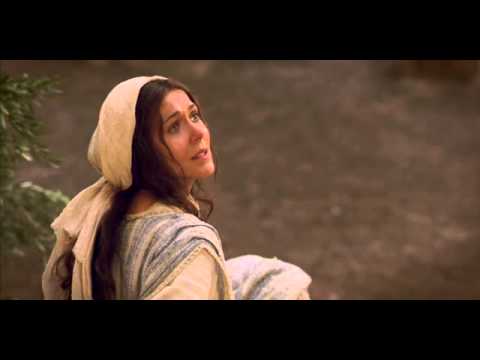
By the time that Jesus died on the cross, Mary had become one of his followers. We don’t know what happened to change her mind . But we do know that when Jesus died on the cross, Mary was there, with the other women who followed him, a short distance away, watching Jesus die. And we do know that Mary went with the other woman to the tomb where Jesus’s body had been laid, intending to put sweet-smelling spices on his body, only to find that the tomb was empty because Jesus had risen to life.

Mary had travelled a journey, even harder than the one from Nazareth to Bethlehem when she was pregnant. She had travelled the journey from being someone who pondered about all the things that she saw and heard to being someone who was a devoted follower of Jesus.

And that is the challenge that faces us today. We may ponder within us all that we have heard about Jesus. We may consider ourselves to be a spiritual person. But are we willing to make that transition, like Mary did, into someone who is fully devoted to Jesus and to following him wherever it takes us?

Wednesday, April 08, 2015

We Belong to the Land


We Belong to the Land:

the story of a Palestinian Israeli who lives for peace and reconciliation


by Elias Chacour and Mary E. Jensen


This is the story of Elias Chacour, a Melkite Catholic priest, and his ministry in the small Galilee village of Ibillin and beyond.
Reading this book, three things become very quickly apparent about Elias Chacour –
    1)   his passionate love for Jesus,
    2)   his love for the Palestinian people,
    3)   his desire to see the Jewish and
    Arab people reconciled.
Woven together through this book are the story of Elias Chacour’s life and the story of the Palestinian people. Elias Checour was born to a Palestinian Christian family in the village of Biram in Upper Galilee in 1939. Along with his whole village he experienced the tragedy of eviction by the Israeli authorities in 1948 and became a refugee in his own land. He and all his family members became citizens of Israel when the state was created.
In 1965, Father Chacour was ordained and appointed as priest of St. George Melkite Catholic Church in Ibillin. Father Chacour realised early on that his work in Ibillin would require more than routine priestly duties. He knew that the only way for Palestinian people to flourish was through education. Through his efforts and leadership, a pre-school, a village library and a secondary school were set up to serve the children of the village.
His vision was that through education, children and young adults of different faith traditions – Christian, Muslim, Jewish and Druze – should learn to live and work together in peace. He has traveled around the world with this message and, alongside the secondary school, a peace centre was built in Ibillin for international visitors to stay and join in this ministry.
This book is a reminder that there is an ancient Christian church in the Middle East. Although for many Christian Arabs their faith may be nominal and inherited, for many their faith is living and vibrant. The outward form may appear archaic and formal to those of us who are more used to a “modern” or informal expression of our faith. Nevertheless, for many their devotion to Jesus and understanding of his teaching is beyond question.

Jesus is the one


Jesus is The One.

He is the one who existed with God the Father from before the beginning of time.

He is the one whose human existence started not from the sperm of a human father, but by the activity of the Holy Spirit.

He is the one whose mother was a virgin when he was born.

He is the one who lived and experienced a real human life.

He is the one who lived a perfect human life without sin or failure.

He is the one who shows us exactly what God the Father is like.

He is the one whose teaching is perfect and without fault.

He is the one who paid the penalty of human sin.

He is the one who bore the pain of human suffering.

He is the one who overcame the power of human selfishness.

He is the one who conquered death.

He is the one who rose to life from the grave.

He is the one who returned triumphant to God the Father.

He is the one who poured out the Holy Spirit on his followers.

He is the one who now rules and reigns with God the Father.

He is the one who knows and understands what it is like to be human.

He is the one who prays for me constantly.

He is the one who pleads my cause with the Father.

Jesus is The One.

Friday, February 20, 2015

Deep Church Rising: Rediscovering the Roots of Christian Orthodoxy


Deep Church Rising: Rediscovering the Roots of Christian Orthodoxy

by Andrew G. Walker and Robin A. Parry

I found this to be a very thought-provoking and challenging book. Walker and Parry argue the case for what they call ‘deep church’. This is similar to what C. S. Lewis described as ‘mere’ Christianity. By this they mean the basic, historic Christian faith that has been believed and practised by Christians throughout the centuries. This includes a straightforward belief in Jesus as described in the Bible – that he was conceived through the activity of the Holy Spirit, his mother was a virgin before his birth, his birth was accompanied by highly unusual events, he performed miracles, he died for us so that we can be forgiven, he rose from the dead, and he will return at some point in the future and will judge all humankind. Along with this goes an acceptance of the Bible as being inspired by God and authoritative for life and salvation. This is the Christian faith set out in the historic Christian creeds.
Walker and Parry contrast this orthodox Christianity with the liberal questioning of the fundamentals of faith which has been common currency in the wider church for a century or two. They use the term “the third schism”. The first schism was the split between the Roman Catholic Church in the West and the Eastern Orthodox Church which occurred in the eleventh century. The second schism was the split between Roman Catholics and Protestants arising from the Reformation in the sixteenth century. The third schism, they say, is the divide between those who believe in the orthodox core of the Christian faith, as expressed in the historic creeds, and those who do not. They argue for unity among all those who hold to the orthodox core of the Christian faith, whether they be evangelical Protestants, traditional Anglicans, Roman Catholic or Eastern Orthodox. This means those who, as the (fairly) new Archbishop of Canterbury Justin Welby says of himself, “say the creed without crossing my fingers at any point.”

Walker and Parry examine the role that the church plays in interpreting the Bible. The slogan of the Reformation was “sola scriptura”. This means that each Christian is free before God to interpret the Bible as he (or she) sees fit. The result has been the fragmentation of the Protestant church so that there are now literally hundreds of Christian denominations and groups, each believing that their version of the truth is the right one. In contrast, both the Roman Catholic Church and Eastern Orthodox Church maintain their unity because the Bible is interpreted in a particular way by those who are authorised by the Church to be teachers. We have to admit even within Evangelicalism the important role of the Bible teacher in giving an authoritative interpretation of scripture. Although in theory each believer is free to understand and interpret the Bible for themselves, and there are a wide variety of views about all sorts of things within the Evangelical world, nevertheless there is a boundary beyond which it is not acceptable to go. The question is, how do we determine what is acceptable deviation from the truth and what is not? And how do we decide who it is that determines? What has tended to happen is that when someone has been called to account by others for their deviant understandings of the Bible, they have gone off and started a new church.
The challenge to evangelicals is whether we are prepared to see as our allies those whom we have traditionally seen as our enemies – Anglo-Catholics, Roman Catholics, Eastern Orthodox. Where do we draw the ‘battle lines’? Which issues do we regard as fundamental and which are secondary? This boils down to the question, who do I count as a fellow Christian? Who is my brother and my sister?

A good place to look for an answer is in the Evangelical Alliance’s Evangelical Relationships Commitment
1.       We welcome as Christian brothers and sisters all who experience the grace of new birth, bringing them to that fear and knowledge of God which is expressed in a life of obedience to His word.
2.       We recognise our Christian duty of trust and mutual encouragement to all who serve Christ as Lord, not least to those who conscientiously prefer not to be identified with the same churches, alliances or councils as ourselves.
3.       We respect the diversity of culture, experience and doctrinal understanding that God grants to His people, and acknowledge that some differences over issues not essential to salvation may well remain until the end of time.

It seems clear to me that this commitment means embracing as Christian brothers and sisters many who in the past we have regarded as being ‘beyond the pale’. Those people who we have dismissed as being ‘nominal Christians’, who we have thought of as at best ‘sub-standard’ Christians, or even as not true Christians at all.
The Apostle Paul writes warmly to the church at Corinth, commending them and thanking God for the evidence of God’s life working in and through them. Nevertheless, as we see from Paul’s letters, the church was riven by divisions, tolerated immorality, promoted social elitism at the Communion table, and even included those that doubted the truth of the resurrection. At no point does Paul question the reality of their life in Christ – although he does warn them that their faith is in vain if Christ was not raised from the dead! He regards them as brothers and sisters who need encouragement and correction. I suspect that if we saw such belief and behaviour in any of our churches, we would encourage – or compel – the people concerned to leave the church.

I will finish by quoting from Genesis 4, out of context, “Where is your brother?” The answer is probably in the local parish church, the black-majority Pentecostal church, the Roman Catholic church, the Methodist church, or even the Eastern Orthodox church.

Archbishop Justin Welby: Risk-taker and Reconciler


Archbishop Justin Welby:
Risk-taker and Reconciler

by Andrew Atherstone


I have really enjoyed reading this first biography of the (fairly) new Archbishop of Canterbury.

Partly because Justin Welby’s time at Cambridge – forty years ago – overlapped with mine and I could picture some of the scenes described. I don’t think I ever met Justin at Cambridge: our paths didn’t cross. He was at Trinity College and I was at Fitzwilliam College; he studied law and modern history and I studied sciences; he was a Charismatic Anglican and I was a Reformed Baptist. However, we were both involved in the Cambridge Inter-Collegiate Christian Union (CICCU) and at that time CICCU gathered about 400 people in the Cambridge Union debating chamber for the ‘Bible Reading’ on a Saturday evening. We must have both been seated in that large room on many Saturday evenings, along with other such notables as Nicky Gumbel who has become famous for the Alpha course and John Mumford who went on to start the Vineyard Church movement in the UK.

And partly because I love Justin’s emphasis on unity among all those who acknowledge Jesus Christ as Lord and Saviour. Although Justin started out as a Charismatic Anglican, attending St Matthews Church in Cambridge and later serving as a lay-leader at Holy Trinity Brompton, he has embraced spirituality from other traditions and has worked for unity within the Church of England and the wider Anglican Communion. He now describes himself as an orthodox Christian who can “say the creed without crossing my fingers at any point.”
Justin has set himself three priorities for his time as Archbishop of Canterbury –

1.       Renewal of prayer and religious life
2.       Reconciliation
3.       Evangelism and witness
During a sermon at the New Wine conference in 2013, Justin Welby said, “We are in a time of revolution and we need another revolution in the Church. What it looks like, I do not know, but I want to be in it. What it feels like is Jesus-centred, fire-filled, peace-proclaiming, disciple-creating, and the Church word for this revolution is revival.”

I pray that God will use Justin Welby to bring revival both within and beyond the Church of England.

Monday, April 21, 2014

Easter Meditation

Joseph of Arimathea is mentioned in all four gospels, but we hardly ever mention him in our churches.

Joseph of Arimathea was a rich man. He was a member of the Sanhedrin, the Jewish ruling Council. In fact the Bible tells us that he was a prominent member of the Council. He was one of the wealthiest and most influential men in Judea.

He was a good man, a righteous man. He made sure that all his business dealings were straightforward and above board. He paid his workers fairly. If he gave his word, you could rely on it. If he shook hands on a business deal, you knew he wouldn’t go back on it, you could rely on it as if it was a written contract.

And he was waiting for the kingdom of God. He was looking forward to the coming of the Messiah: the one sent from God who would put everything right; the one who would establish truth and righteousness; the one who would put the worship of Yahweh, the one true God, back at the heart of the life of Israel; the one who rid of the country of the hated Romans and establish Israel again as an independent nation, answerable to no-one but God alone.

So when Jesus appeared and started proclaiming: “The kingdom of God is at hand!” and teaching and healing people, Joseph was immediately curious. He started going to listen to Jesus when he was teaching in the Temple grounds. But so he wouldn’t draw attention to himself, Joseph took off his fine linen robes, and put on the rough woollen cloak of a worker. He ruffled up his hair and beard, and did his best to look like an ordinary working man. And he hung around at the back of the crowd.

Joseph soon became convinced that Jesus was indeed the Messiah, that he was the Son of God. That, in fact, Jesus was something even more: that in some way, that Joseph couldn’t quite fathom, Jesus was actually God. That although God ruled and reigned from heaven, that although God’s presence filled the earth, in some strange way God’s presence was concentrated in this teacher and miracle worker from Galilee. So that when Jesus said something, or did something, it was as if God in heaven was doing it or saying it.

So Joseph became a follower of Jesus. But he kept it quiet from the other members of the Council. It wasn’t that he was afraid of telling them. It was just, well, it was just that he didn’t want them to think that he was a fanatic, that he was mixing with the rabble that were supporting Jesus, that he was becoming an extremist. So he didn’t tell them.

And every time the Council discussed what to do with this trouble-maker Jesus, Joseph bit his lip. If pushed, he would agree with the wise old Gamaliel and say, “Do nothing. If this man is truly from God, then we can’t stop him. If he’s not from God, then it will all fizzle out.”

Somehow he discovered that Nicodemus was secretly following Jesus too. Nicodemus was the teacher who had gone to Jesus at night-time because he was afraid of what the other leading Jews would think. He was the one who Jesus had told, “You must be born again!” Now there two of them on the Council who were disciples of Jesus.

Nicodemus never thought that it would come to the Council plotting to kill Jesus. Of course, they had spoken about getting rid of Jesus, but Nicodemus had thought it was all hot air. That none of them would ever really follow through. But a lot of these men really hated Jesus. They hated his popularity with the people. They hated the way he showed up their hypocrisy and wickedness. They thought that if Jesus rocked the boat with the Romans, and if the Romans clamped down on them, they would lose their positions of power and influence.

And so the plot to kill Jesus began. Joseph couldn’t agree with it. But he kept quiet about being a disciple of Jesus. And so the plan was hatched to pay Judas to betray Jesus, to have Jesus arrested and brought before the Council for trial. And for the death penalty to be decreed. Jesus was dragged before the Council on trumped up charges and dodgy witnesses were paid to give false evidence that Jesus had blasphemed against God. And when it came to voting about what to do with Jesus, Joseph didn’t agree to the death penalty. But he still kept quiet about being a disciple of Jesus. Even then, he didn’t really think that Jesus would be killed. After all, they needed the Roman governor to give approval to an execution, and surely he wouldn’t approve of a non-violent religious leader being put to death. And after all, Jesus was the Messiah: surely he couldn’t die before he had finished his work of liberating God’s people.

But Pilate, the governor, did agree to Jesus being executed. Jesus was dragged off by the Roman soldiers, beaten and humiliated, mocked and insulted, and forced to carry the cross beam to the execution place. Then Jesus was nailed to the cross and suffered the torment and agony of a Roman crucifixion. By then, almost all of Jesus’ disciples had made themselves scarce. Only the women remained; they were looked upon by the soldiers as posing no threat and were allowed to stand near the cross. So they waited and watched the cruel agony of Jesus’ death.

Finally, Jesus gave up his spirit and died. News reached Joseph in his house in the city. He was surprised. No he was shocked. First of all he hadn’t really expected Jesus to be executed. And secondly, he was surprised at how quickly Jesus had died. Usually crucifixion was long drawn out exceedingly painful death.

At last, Joseph was spurred into action. He was hugely deflated that the man he thought was the Messiah should end his mission in humiliation and failure. But he was angry – angry that his fellow Jews should so easily despatch an innocent man to his death, angry that the Romans with their reputation for justice could so easily collude with the Jewish leaders. And angry with himself for giving in to his fear and not speaking out for Jesus. So he determined to do something. The least he could do was to make sure that the man had a decent burial. He was done with secrecy: he didn’t care now  who knew that he was a follower of Jesus. So he boldly marched up to the governor’s palace and demanded to speak with Pilate. “I want to take away Jesus’ body and bury it.” “What? Is he dead already?” Pilate checked with his commander that Jesus was indeed dead and then gave permission for Joseph to take away Jesus’ body and bury it.

So Joseph found his friend Nicodemus and the two of them went and took Jesus’ body and carried it and put it in Joseph’s tomb. Joseph was a rich man and he had had a tomb made ready for when he died. It was cut out of the rock in a garden on the edge of Jerusalem city. The tomb had never been used before and so they laid Jesus’ body in it, wrapped in a linen cloth. Then the two of them rolled the large round entrance stone in front of the entrance, so the body would be secure. It was Friday evening, just before the start of the Sabbath. Two of the women, Mary Magdalene and Mary the mother of Jesus, followed Joseph and Nicodemus to the tomb. They saw exactly where the tomb was and then went away to prepare spices. The next day was the Sabbath, when they would rest as the Law of Moses said, and they would come back early on the Sunday morning to embalm Jesus body.

And now it was Sunday morning. And news reached Joseph’s home that the tomb was empty! Jesus’ body was gone! And what’s more the women – Mary Magdalene and Mary the mother of Jesus – were insisting that Jesus had come to life gain, that they had seen him alive!

What was he to think? Could it be true that Jesus really had come back to life? Could it be true that Jesus really was the Messiah? That he really was God, and that death could not rule over him? Could it be true that Joseph still had the opportunity to follow Jesus, to be known as his disciple, that he had not after all blown everything through his fear and stupidity.

And it did indeed turn out to be true. Jesus was raised to life. He was seen by the woman in the garden. He passed through locked doors to visit most of the eleven disciples in Jerusalem (I say, eleven because Judas was no longer with them) and made himself known to the two disciples on the road to Emmaus. In fact Jesus appeared to many of the disciples over a period of forty days before he ascended into heaven. It may be that Joseph himself encountered the risen Lord Jesus. Whether he did or not, one thing was for sure. Joseph had got it right when he put his trust in Jesus. And he was able to live the rest of his days unashamed about being a disciple of Jesus, confident that when he died he too, like Jesus, would be raised to life again and would spend eternity worshipping and serving his Saviour.

Bible passages
  • Matthew 27:57-61
  • Mark 15:42-47
  • Luke 23:50-56
  • John 19:38-42

Saturday, February 15, 2014

The Father turned his face away . . . or did he?

Psalm 22 is a powerful "messianic" psalm. In vivid detail it describes what happened to Jesus on the cross. Its opening words were cried out by Jesus as he was dying: "My God, my God, why have you forsaken me?" It seems that Jesus was aware, even as he was facing death, that he was fulfilling this psalm and that his death was significant because he was giving his life in fulfilment of the Scriptures. The psalm goes on to describe, hundreds of years before the event, exactly what happened to Jesus as he suffered the agony of the cross . .
'All who see me mock me; they hurl insults, shaking their heads: "He trusts in the Lord; let the Lord rescue him . .'" (v.8)
'I am poured out like water, and all my bones are out of joint.' (v.14)
'They divide my garments among them and cast lots for my clothing.'  (v.18)

And in verse 24 we read the surprising words
'For he has not despised or disdained the suffering of the afflicted one;
      he has not hidden his face from him but has listened to his cry for help.'

This seems to fly in the face of 'traditional' evangelical teaching which says that as Jesus suffered on the cross there was a period of time when God the Father 'turned his face away' from Jesus the Son as he suffered because at that moment Jesus was carrying all the sin of humankind and God cannot look upon sin. This is what it means for Jesus to endure 'hell' - he experienced complete isolation from God as he became sin for us. He endured the penalty due to us for our sin so that we can go free and escape God's judgement. Hence the cry that Jesus uttered: "My God, my God, why have you forsaken me?"

Which is true? Did God the Father turn away from Jesus as he bore our sins? Was he really forsaken by God at that moment as he cried out? Or can we believe the psalm when it says, "he has not hidden his face from him"?

There are several ways that we can seek to reconcile this apparent contradiction. We can say that Jesus really was separated from God the Father as he carried our sins. This means that the words of the psalm are to be taken figuratively, looking back on the whole sequence of events surrounding the cross. God the Father was pleased with the obedience of Jesus and when Jesus was dead, the Father raised him to live again and, about 40 days later, lifted him up to heaven and gave him authority and power. God the Father was not ashamed of Jesus, but was pleased with him. He did not ignore his obedience and suffering, but rather honoured him, and in that sense he did not "hide his face from him."

Alternatively, we can take the words of the psalm literally. The Father did not hide his face from his Son, but continued to look upon him and remained with him throughout his ordeal on the cross. In which case, what did Jesus mean when he cried out: "My God, my God, why have you forsaken me?" Was Jesus forsaken by God or not? There are two possible solutions. It could be that this was Jesus' experience, but not the reality: he could not feel the presence of God as he suffered, he felt forsaken by God, but nevertheless God the Father was with him right through the ordeal. Or it could be that Jesus was deliberately invoking this psalm, so that people could see the parallels between the psalm and the events unfolding so that they would realise that his suffering was in accordance with scripture and that he was truly the Messiah. (Or possibly both of these are true - it was Jesus' experience and he was invoking Psalm 22.)

IF this second explanation is correct, if it is true that God the Father did not turn his face away from Jesus but was with him through the ordeal on the cross, then there are some truly amazing consequences for us. Firstly, if it is true that God the Father did not turn away from Jesus as he carried our sin, then it means that God does not turn away from us when we sin. Even when we are disobedient and do things that offend God's holiness, he sticks with us. He is offended, even disgusted, by the sin but he sticks with us because we are his children and his heart is for us. Secondly, it means that as people did disgusting, degrading and downright evil things to Jesus, God the Father was still with him, even though Jesus did not feel it. That means that if people have done disgusting, degrading and downright evil things to you, God did not abandon you: he was still with you, even though you did not feel it. And if at times you feel utterly abandoned by God, you can take some comfort from knowing that Jesus felt just the same, and that God neither abandoned Jesus nor you. That is amazing!


Sunday, January 19, 2014

Take up your cross and follow me

First of all, in the Bible, the word ‘Christian’ is hardly ever used as a label for the people who belong to Jesus. The word is only found two or three times in the New Testament. In the Gospels, the word that is used most is ‘disciple’ which means a follower or apprentice. In the New Testament letters, we find the word ‘saints’ used to describe those who belong to Jesus, or the brief phrase ‘in Christ’, meaning those whose lives are bound up with Jesus.

Having said that, I want to ask you a question: is the Christian life hard or easy? Is it hard or easy to live the life of a Christian, to be a follower of Jesus?
Let’s look at what Jesus said about it. On one occasion he said, “Whoever does not take up their cross and follow me is not worthy of me. Whoever finds their life will lose it, and whoever loses their life for my sake will find it.”  (Matthew 10:38-39) These words talk about taking up our cross and losing our lives. That suggests that it is hard to follow Jesus.

On another occasion (recorded just one chapter later in Matthew’s Gospel), Jesus said, “Come to me, all you who are weary and burdened, and I will give you rest. Take my yoke upon you and learn from me, for I am gentle and humble in heart, and you will find rest for your souls. For my yoke is easy and my burden is light.” (Matthew 11:28-30)  These words talk about Jesus’ yoke being easy and his burden light. That suggests that it is easy to follow Jesus.

Which is it? Hard or easy? Or does, as our critics suggest, the Bible contradict itself?  Or can it be that Jesus contradicted himself? What is the answer to this conundrum? In brief the answer is this: it’s easy to be a Christian if we embrace God’s ways, forsake the world’s ways, and submit to God’s will. It’s hard to be a Christian if we try to hang on to our own ambitions, our own way of doing things, and at the same time try to live for God’s kingdom.

I am going to look at these two passages in a little detail, and then try to apply them to our lives and then try to reconcile them.

“Whoever does not take up their cross and follow me is not worthy of me. Whoever finds their life will lose it, and whoever loses their life for my sake will find it.”  (Matthew 10:38-39)
First let’s be clear that a cross is a method of execution. It was a horrific means of a cruel and lingering death that the Romans reserved for the worst criminals and enemies of the state, in order to make an example of them. If anyone was seen carrying a cross in the first century, it was clear that he was heading for his death. We no longer have the death penalty in the United Kingdom, but it is still used in many countries around the world. The means used are various – hanging, shooting by firing squad, in earlier days in some states in the USA: the electric chair, in some states today a lethal cocktail of drugs. So, putting it into a modern setting, Jesus could have said, “Whoever does not take up their gallows/electric chair/ lethal injection and follow me is not worthy of me . .”
There is a sense in which we take up the cross of Jesus – we embrace his death and make it our own, we receive the benefits that come from his sacrifice – forgiveness, reconciliation with God, justification before God, adoption as sons.

But this is referring not to the cross of Jesus but to our cross: whoever would be a follower of Jesus must take up his own cross and follow him. Following Jesus requires us to die. And in case that’s not clear, Jesus goes on to say that we need to lose our lives for his sake, if we are to follow him.
In what sense must we lose our lives? In what sense must we die? We must be willing to die to, to let go of –
·         our reputation, our good name
·         our rights, especially our right to retaliate
·         being master of our own destiny
·         our ambitions, career plan
·         finding our security in money and things
·         finding our reputation in our social status, or our education
·         looking down on other people.

But we do have a choice: we can hold on to all these things, but if we do the soul within us will shrivel and die, we will become as nothing and lose our life. But if we are prepared to lose our life, to let go of all these things, then we will truly live before God.

“Come to me, all you who are weary and burdened, and I will give you rest. Take my yoke upon you and learn from me, for I am gentle and humble in heart, and you will find rest for your souls. For my yoke is easy and my burden is light.”   (Matthew 11:2-30)

The picture here is of two oxen yoked together to pull a plough. The younger ox yoked together with the older, more experienced ox to learn how to plough. Jesus is the more experienced ox. If we submit to his leadership and keep in step with him, if we walk the way that he leads, we will find our burden easy, we will find that the yoke fits well, and that the burden is light. We will find that the way of discipleship is the path of true joy. But if we fight against his leadership, if we hang on to the ways of world, if we are not ready to die to our self and the ways of this world, then we will find that we are pulling against him, that the yoke chafes, that the burden is heavy.

You probably know the story of the apostle Paul. When we first read about him in the Bible, he is known by his Hebrew name Saul, and we read that in his fanatical devotion to his faith, he persecutes and imprisons Christian disciples because he believes that that are perverting the truth about God. Famously, on the road to Damascus, Paul meets the risen Lord Jesus and the whole direction is turned around. When Paul was recounting the story of his conversion many years later, he says this: “We all fell to the ground, and I heard a voice saying to me in Aramaic, ‘Saul, Saul, why do you persecute me? It is hard for you to kick against the goads.’”  (Acts 24:16)

‘Goads’ are poles, usually with pointed tips, that are used to ‘encourage’ animals to keep moving in a certain direction. If an animal ‘kicks against the goads’ it makes life even more uncomfortable for itself. That’s what Paul was doing. He was trying to kick against the truth revealed in Jesus, and he was making his own life difficult.

That’s the choice that faces us. We can accept the yoke of Jesus, lay down our lives, submit to his ways, discover true life, and experience the joy of walking with Jesus. Then, we will know, through our own experience, the truth that his burden is light.

Or we can ‘kick against the goads’, refuse to surrender our lives to him, and in so doing we will ‘lose our lives’. We will find life hard because we are constantly resisting his ways and trying to follow our own way, and the way of the world, while at the same time trying to be a follower of Jesus. This is a hard way, and ultimately a way that brings no joy or satisfaction.

Thursday, January 09, 2014

You are not your own; you were bought at a price


I’ve been a Christian now for more than forty years. The danger of getting old is that you can become nostalgic; you can think that things were better in “the old days” - when you were young.

There are so many things that have changed in the Christian world since I was a young Christian in the 1970’s. And I am pleased about most of them. However, there is one thing which we have lost which I think is a mistake.

When I was a young Christian, there was a big stress on being totally committed to God, on self-sacrifice, on putting aside one’s own interests and ambitions for the sake of the gospel, of “dying to self.” Along with it there was a whole load of ‘legalism’. For the first seven years of my Christian life, I spent most of the time feeling guilty. Feeling guilty that I wasn’t praying enough. Feeling guilty that I wasn’t reading my Bible enough. Feeling guilty that I wasn’t getting up early enough. Feeling guilty that I wasn’t telling people about Jesus.

I was hugely relieved when I discovered the truth of God’s grace. When I realised that all my sin – past, present and future – is forgiven by God and covered by the sacrifice of Christ on the Cross. When I realised that I am adopted by God as his son, that I am accepted totally by him, and that it doesn’t depend on my behaviour. It was truly liberating to realise that my standing with God comes from what he has done for me, and not what I can do for him. It’s great to live as a Christian without guilt. It’s good to know that my walk with God depends on relationship with him and not on keeping rules and regulations. It’s good to know that God’s Holy Spirit is working within me to change me from the inside out, and that being a Christian is not trying in my own strength to conform to an outward standard of behaviour. I’m not trying to conform to someone’s idea of what a Christian life looks like – whether my own ideas or someone else’s. Instead I am drawing strength from God’s own Spirit and changing day by day into his likeness.

Nevertheless, I have a nagging feeling that I am missing something. I have abandoned all the guilt, and all the need to obey a set of rules and regulations.  But with it, I have also ditched a strand of truth which runs through the teaching of Jesus and the New Testament: the call to lay down our lives for the sake of Jesus and the gospel 

‘Whoever wants to be my disciple must deny themselves and take up their cross and follow me.  For whoever wants to save their life will lose it, but whoever loses their life for me and for the gospel will save it.’     Mark 8:34-35

‘Very truly I tell you, unless a grain of wheat falls to the ground and dies, it remains only a single seed. But if it dies, it produces many seeds.’     John 12:24

‘For to me, to live is Christ and to die is gain.’      Philippians 1:21

‘For you died, and your life is now hidden with Christ in God.’       Colossians 3:3

I have been thinking recently about how to bring together two apparently contradictory strands that run through the Bible. The Bible makes it clear that God deals with me according to his amazing grace –  the death and resurrection of Jesus has dealt decisively with my sin and my standing with God depends on what he has done and not what I do. And the Bible also makes it clear that I am called to a life of self-sacrifice, to lay down my own life for the sake of Jesus and the gospel.

How do I bring these two strands together? It seems to me that the meeting point is found in the death of Jesus. On the one hand, the sacrifice of Jesus deals with our sin: Jesus in his death bore the pain and the penalty of my sin so that I can go free. Jesus became sin for me, so that I am forgiven and pronounced ‘not guilty’ in God’s sight. On the other hand, the sacrifice of Jesus was a price paid for me, or ransom, so that I no longer belong to myself: I belong to God.

‘In him we have redemption through his blood, the forgiveness of sins, in accordance with the riches of God’s grace. .’     Ephesians 1:7

‘Since we have now been justified by his blood, how much more shall we be saved from God’s wrath through him! For if, while we were God’s enemies, we were reconciled to him through the death of his Son, how much more, having been reconciled, shall we be saved through his life!’     Romans 5:9-10

‘For you know that it was not with perishable things such as silver or gold that you were redeemed from the empty way of life handed down to you from your ancestors, but with the precious blood of Christ, a lamb without blemish or defect.’     1 Peter 1:18-19

‘Do you not know that your bodies are temples of the Holy Spirit, who is in you, whom you have received from God? You are not your own; you were bought at a price. Therefore honour God with your bodies.’     1 Corinthians 6:19-20

‘For just as each of us has one body with many members, and these members do not all have the same function, so in Christ we, though many, form one body, and each member belongs to all the others.’     Romans 12:4-5

In fact, not only do I belong to God, but I also belong to my fellow-members of Christ’s body, the church. I can’t make any decision about my life in isolation – whether it’s about my career, my happiness, my finances – I have to consider the impact of my decisions on the gospel, my fellow church members, and on Jesus himself.

Tuesday, December 31, 2013

Thoughts about thinking

I once read something to the effect that a writer doesn't write in order to let people know what he thinks; rather he writes in order to find out what he thinks. That seems to me to be true of me. Often it's when I try to express things for other people to understand - whether something in writing or a preached sermon - that I truly realise what I think and believe myself. This blog is rather like that: I am writing mainly for myself - to work out what I think about various issues. If others find what I write helpful, then that's great.

Monday, December 05, 2011

Thoughts about apostolic ministry

In recent years, there's been a lot said and written about the ministry of apostles in the church today. The traditional view is that only those who saw the risen Lord Jesus - either in the flesh, or like Paul in a vision - qualify as "apostles". More recently, many Christians have come to accept that there are current-day apostles whose ministry is planting new churches or overseeing existing churches. I have been reflecting recently about the nature of apostolic ministry. It seems to me - looking at the Bible and at what is happening in the churches - that there are several different functions or facets of apostolic ministry. Rarely are all the facets seen in one man - most apostolic men have more than one, but few possess them all. These functions include planting individual churches - some men have the passion, gifting and facility to start one church and then move and plant another, and then move and plant another, and so on. Another function is stirring up vision, energy and faith for mission, whether in the UK or abroad - this is the restless spirit that is always looking to the "regions beyond."  Another function is being a father to church leaders. Another is oversight of existing churches, whether sorting out foundations or identifying areas for growth and progress. Another function is uniting churches into a common goal and purpose, often by travelling among the churches.
 
As I said, a few men have the gifting and capacity to be or do all of these things. The apostle Paul was one. There have been a few others, through the course of church history. But my guess is that there are not many men who can do all these things. Most people that we recognise as "apostolic" will probably only have the measure to do some of them. Which means that we will need apostles working together, and working together across the churches, if we are to get the benefit of the whole gamut of apostolic ministry. And it probably means that any one church will not find all that it needs by being overseen by one "apostle" - rather we will need to be exposed to ministry from several apostolic men if we are to go on to maturity.

Monday, September 12, 2011

Upside-down attitudes

In Luke 14:1-24, Jesus teaches that our attitudes as disciples should be the opposite to the attitudes of this world. In this life, if we put our minds and energy to it, we often can obtain what it is that we want – whether status, the praise of other people, money or security (as far as security is possible in this uncertain world.) Jesus taught his disciples not to live for success and reward in this life, but to aim to be rewarded by our heavenly Father in the life to come. In particular Jesus teaches that a disciple has an upside-down attitude to status (v.7-11), reward (v.12-14), and the value of people (v.15-24).

The parable that Jesus told (v. 15-24) had its immediate application to the Pharisees that Jesus was dining with. The Jews of Jesus’ day often talked about the coming of God’s kingdom, and the Messianic age, in terms of a feast. The great feast is a picture of the age to come. The Jews were God’s chosen people and they had the revelation of God through the law and the prophets. It was to the Jews that the Messiah would come; through the Jews that God would bless the world. So the Jews thought of themselves as those who were invited to the great feast. This was especially true of the Pharisees who were the strictest of the religious groups of the day, who took the Bible very seriously, and who had clear ideas about what sort of behaviour was acceptable as a good Jew.

Jesus came proclaiming that the kingdom of God was at hand and that he himself was God’s son, the Messiah. However, many of the Jews and especially the Pharisees rejected him. Jesus went to the outcasts – the lepers, the untouchables, the tax collectors, the prostitutes, the “sinners”.
Through the parable, Jesus was saying was that those invited to the feast – the Jews and particularly the Pharisees – had refused to come and so the invitation was being extended to the “outsiders”, those the Pharisees looked own upon, and even to Gentile “unbelievers” who would later receive Jesus as their Saviour. (It’s not surprising that the Pharisees plotted to kill him!)

The parable has a secondary, but nevertheless very important, application to everyone today – it shows that Jesus is interested in the outsider and the outcast, and that Jesus is more interested in people who are willing to embrace him and to follow him wholeheartedly than people who are outwardly respectable but unwilling to follow him.

Monday, August 22, 2011

What is a disciple?

There are several words and expressions used by Jesus, the gospel-writers and in the book of Acts to describe what we call “Christians” – believers, disciples, followers of The Way, the people, and Christians (‘Christian’ is in the Bible, but it is only used three times in the original Greek).

By far the most common word used of Christian believers is ‘disciple(s)’. This word is from the same root as the word ‘discipline’ and it means a pupil. The essence of being a disciple is that of being a learner – one who is not yet complete; one who recognises the need to continue to learn or to grow.

The essence of discipleship is the call to change. God calls us to continual change and transformation. Growth is not possible without changing. We are called to change in our attitude to God, to ourselves and to others.

For example, we are called to change our view of ourselves – to accept God’s verdict over us of ‘not guilty’ because our sins are forgiven in Christ. It means seeing ourselves as objects of God’s love, not his judgement. It means bringing our opinion of ourselves in line with God’s opinion – that we are adopted as sons and daughters and inheritors with Christ of his glory.

We are also called to forgive those who do wrong to us. That calls for a change of attitude. It means letting go of hurt, pain and bitterness and giving up the ‘right’ to seek retribution. It means trusting the God who knows everyone’s hearts - that he will deal with those who have hurt us with true justice, combined with appropriate mercy.

It also means a change of attitude towards money, possessions, and where our security lies. It means a change of priorities and motivation – what comes first: our careers, our families, our work, our community involvement, our hobbies, our worship, our church commitments?

When someone has been a Christian for a long time, they are inclined to think that they have done all the changing that they are going to do, that all that remains for them is to stay faithful. There is a temptation for an established Christian, when they read the Bible or hear a sermon, simply to add a new insight to their accumulation of Bible knowledge. Nevertheless, as a disciple, we are called to continual growth and change. I believe that God is challenging us to be ready to change our thinking –to face the fears and insecurities that remain in our minds and emotions, to grow in our experience of God’s love for us, to deal with unbelief, to grow in faith and be more expectant that God will work in miracles of healing and provision.

Tuesday, October 26, 2010

Well, I've re-discovered my old blog, set up a few years ago and then abandoned. I've added a recent photo and will be starting to add some postings, so watch this space.