Sunday, April 12, 2020

Easter meditation: The last enemy is death

The last enemy is death

Easter Sunday is the high point of the Christian year. We celebrate the fact that Jesus triumphed over death, rose from the grave, and opened up the way for us to overcome death. I want to take a few minutes to look at what that means for us today.

In our garden we have a young tree that is blossoming for the first time. The tiny white buds are opening up into little flowers. The tree is covered with white blossom and sharp thorns. It is a hawthorn, but not any hawthorn, it is a Glastonbury thorn – a special sort of hawthorn that flowers twice a year: in the summer and at Christmas. As I grew up in Glastonbury, Joy thought that the tree would make a special gift for me on my 60th birthday.

Growing up in Glastonbury, I heard all sorts of legends. One of them was that Joseph of Arimathea, the rich man mentioned in the Gospels who made his tomb available for Jesus’s body, came to Glastonbury after Jesus’s death and buried the chalice, or cup, that was used in the Last Supper by Jesus and his disciples. There is a spring in Glastonbury called the Chalice Well and the water that comes out of the spring is tinged red by iron deposits, but is said that the red colour comes from Jesus’ blood.

It is said that Joseph of Arimathea planted his staff into the ground at Glastonbury and that it miraculously took root and sprouted, growing into the Holy Thorn which flowers twice a year. And my little tree is a descendent of that one! Now it has to be said that there is no historic evidence for any of that – apart from the tree in my garden – and it is, almost certainly, a load of made-up nonsense.

By contrast, I read something this week about the death and resurrection of Jesus. An academic historian wrote, “Speaking as an ancient historian, I can confirm that the crucifixion of Jesus of Nazareth is one of the best-attested facts in ancient history.” The same historian pointed out that although the resurrection is less well documented, but there are all sorts of lines of evidence that point to it being historically true. 1

As Christians, we are not immune from death and suffering. Death is horrible. I’ve been reminded of that vividly in the last few days, as I have heard news about the deaths, or approaching deaths, of three people.

The first was a lovely old lady called Rosemary who was a founder member of the King’s Church in Uckfield. Rosemary was full of God’s love: she gave thanks to him continuously, was exceptionally generous, and did all she could to help other people. In fact, I was at a funeral about three years ago and Rosemary was busy serving food to people afterwards. Her daughter said to me, “I tell mum to slow down but she won’t. She’ll be serving sandwiches at her own funeral!” Rosemary got ill with the Corona virus, was admitted to hospital, and passed away on Thursday night.

The second was the husband of a colleague of mine. Maureen is a Christian lady and worships regularly at All Saints. She was a member of Christchurch many years ago. Her husband John was not a believer. He was in his seventies and a charming, polite, and generous man. He was very supportive of the people with learning disabilities that are cared for by the homes where Maureen and I work. He was always well-dressed and took care of his appearance. I don’t think that I have ever seen him, in any context, without a collar and tie. John developed a chest infection. After two rounds of antibiotics, his doctor concluded that it was a viral infection and he was admitted to hospital about 10 days ago. He tested positive for the Corona virus and he died on Friday morning.

The third has not died yet but is terminally ill with cancer. Humanly speaking, she has months, or maybe only weeks to live. She is a young woman called Emily. She is married and has two young boys – one six and one less than a year old. Emily’s mother, Sue, is a bit older than Joy and I. She and her husband lived in Sussex and were friends of ours many years ago. She moved to South Africa with her family more than 30 years ago. A few years after they got there, her husband died of a heart attack, and then a couple of years later her eldest son tragically died in a car accident. Over the years, we have lost touch with Sue, although bits of news have reached us. Then a few months ago she got in touch with the devastating news about Emily.

Death is horrible. It causes grief, pain, separation, loss, even despair. Death is vile. It stinks. The Bible refers to death as “the last enemy”.2

The good news is that through the crucifixion Jesus defeated death.3 As he appeared to be at his weakest, as he suffered and died a degrading death on the cross, Jesus achieved his greatest victory. And by his resurrection, he showed the world, and all the powers of darkness, that it is true. By coming to life, by leaving the tomb empty, Jesus has demonstrated that death has truly been overcome. That is the hope that we have as Christians, that though we will die, we will be raised to life at the last day, that we will live and reign with Jesus forever.

But, as I said before, that doesn’t mean that life is always plain sailing. As you read Paul’s writing, especially 2 Corinthians, you realise that he endured great suffering and that it took a toll on him emotionally. In fact his words give the impression of someone who had suffered from depression. He writes, “. . we despaired even of life. Indeed, in our hearts we felt the sentence of death.”4 He’s not talking here about an outward, “real” sentence of death; he had been in court many times and suffered imprisonment and beatings; he could cope with that! No, he’s talking about something he felt in his heart, in his inner being – despair and death.

Later in the letter he writes, “We always carry around in our body the death of Jesus, so that the life of Jesus may also be revealed in our body”.5 Jesus humbled himself, became a human being, and experienced suffering and even death – the cruel and degrading death of crucifixion. That’s how he won his victory over sin and death and hell. We are called to follow after Jesus by humbling ourselves and embracing suffering. 6 The upside-down way that God’s kingdom works is that, in order to bring the victory that comes from the crucifixion, we have to embrace the same way of suffering that Jesus himself endured. The victory that was won on the cross must be brought into being through the cross. In other words, if we want to know the victory of the cross in our own lives, we must be prepared to embrace suffering. If we want to bring the victory of the cross to other people, we’ve got to prepared to embrace suffering in our own lives.

But we know that at the last day, the kingdom of God will come in completeness, the victory of the cross will be fully established, suffering will end, and death will be defeated.

As it says in 1 Corinthians –

“Death has been swallowed up in victory”7

“Where, O death, is your victory?
Where, O death, is your sting?”8


1.    N.T. Wright in Christianity Magazine, April 2020, page 69
2.    1 Corinthians 15:26
3.    Hebrews 2:14-15
4.    2 Corinthians 1:8-9
5.    2 Corinthians 4:10
6.    Philippians 2:5-11
7.    1 Corinthians 15:54 quoting Isaiah 25:8
8.    1 Corinthians 15:55 quoting Hoseah 13:14


Saturday, March 21, 2020

Jonah 4:5-11

What is your answer?


Jonah is one of two books in the Bible that ends with a question (the other one is Nahum.) God asks Jonah, “Should I not be concerned about this great city?” The book doesn’t record Jonah’s answer. Does Jonah come to embrace the truth that God is full of compassion? Does Jonah welcome the Ninevites’ repentance and rejoice that the preaching of God’s word has borne fruit in their lives? Or does he continue in his stubborn self-righteousness and lack of mercy? We don’t know.

Why does the book end this way? Why doesn’t it give us the satisfaction of knowing how the story ends? Because God wants to pose the same question to each one of us. God wants us to consider whether we are ready to forgive and welcome everyone whom he forgives and welcomes. Or whether, like Jonah, we will cling on to our self-righteousness and look down on those who have come late to the party of repentance and faith.

Last time we looked at the storm within Jonah’s heart. We saw the contrast between God’s character and Jonah’s. God is compassionate, merciful, loving, forgiving and patient. Jonah was self-righteous, selfish, angry, vengeful, idolatrous, prideful, and untrusting.

Here in verse 5 we read, “Jonah went out and sat down at a place east of the city. There he made himself a shelter, sat in its shade and waited to see what would happen to the city.” 

It seems that Jonah was still expecting, and hoping, that God would pour out his wrath on the city of Ninevah, whether fire and brimstone, military invasion, or plague and pestilence. Even though the Ninevites had repented, Jonah thought that they were still worthy of God’s judgement. It’s easy to be critical of Jonah, but often we are little different. When we hear of murderers or terrorists turning to Christ, we are sceptical of their motives and reluctant to embrace them as brothers. We are pleased that they intend to live the remainder of lives in a peaceful and productive way, but often we are reluctant to forgive former way of life. We think that somehow they need to pay for their previous crimes. But that is the scandal of the gospel: God is ready to forgive the gravest of sins and welcome forgiven sinners into his kingdom. God wipes the slate clean: he forgives our sins and chooses to remember them no more. None of us can gain God’s favour by our good living. We are all affected by selfishness, greed, and even hatred. We are tainted by what people used to call the corruption of sin. None can gain God’s favour by the purity of our own lives: we are dependent on his mercy.

Here’s a mystery: how can God extend mercy to guilty sinners, while at the same time maintaining truth and justice. Praise God that he gave his own Son, Jesus who died for us on the cross. Jesus took on himself the pain and penalty of sin so that we can go free. As one old hymn puts it, the cross is the place where heaven’s love and heaven’s justice meet”. And another hymn puts it this way: “And Heaven's peace and perfect justice, kissed a guilty world in love.”


But God was not satisfied to leave Jonah in his vengeful self-righteousness. God had intervened dramatically when Jonah’s life was in danger. And God had shown great mercy to Jonah when Jonah had resisted God’s word and run in the opposite direction. Now God wanted to work on Jonah’s character so that it became more like God’s own character. So God provided a vine (verse 6), and a worm (verse 7), and a scorching east wind (verse 8). These were like a parable, acted out in the events of life, to bring Jonah to his senses. God wanted Jonah to realise that just as he, Jonah, had received God’s mercy it was the right response to extend that mercy to others.

We are living in strange times, as the Corona virus threatens not only our way of life, but life itself. Some see this as God’s judgement on a sinful world. That may or may not be the case. It’s certainly a wake-up call to us in the developed world as we expect a remedy to every disease and a solution to every problem. But whatever it is, let’s not distance ourselves from the world. We too are tainted by the corruption of sin. We have received God’s mercy; let’s be merciful to others. Let’s take on the character of God: compassionate, full of mercy, loving and forgiving.

How will we respond to the question that God asked Jonah? Are we ready to embrace God’s character and show his mercy to the world?

Tuesday, November 12, 2019

Warfare


Warfare

Introduction

We decided a while ago that we wanted to intersperse our series on the book of Acts with a number of what we call “Big Issues” – things that are “hot potatoes” in the world we live in today – things like relationships and sexuality, the use of social media, so-called “green issues” – the environment, and so on.
It’s appropriate this morning – on Remembrance Sunday – that I should be looking at the issue of warfare.
This is a subject that Christians have disagreed on over the centuries –
·         Some take the line of being Pacifists; they believe that Jesus put forward the way of non-violence and that if we are to be true followers of Jesus then we too must be non-violent in every circumstance; that all killing is wrong.
·         Others look at the same Bible passages and arrive at the conviction that there are circumstances when it is necessary for Christians to take up arms in order to stand against evil – the so-called “just war” theory.
As I thought about it, I realised that this is an example of what theologians sometimes call a secondary issue. It’s not a primary issue in the sense that what we believe about warfare is not essential to salvation. It’s not a primary issue in the sense that it should not be a barrier to Christian unity – we should not stop our fellowship with someone because they have a different belief to us on this issue.
The main reason why Christians disagree over this issue is that the Bible nowhere gives clear and direct teaching on what should be the Christian attitude to warfare. So we have to look at a number of Bible passages that have some bearing on the subject and work out what we should believe.
So this morning we are going to think about how we understand the Bible and, in particular how to deal with issues that are not directly addressed in the Bible.
This morning, I am not going to tell what to think, but I hope to be able to tell how to think.
I will be talking about warfare but I also want to look at the wider issues of how we handle it when Christians disagree and how we go about understanding what God wants us to do when there is no clear instruction in the Bible.

Dietrich Bonhoeffer

Dietrich Bonhoeffer (1906-1945)

This dilemma is well illustrated by one of my ‘heroes of the faith’. Sometimes in interviews people are asked who they would like to meet – whether that person be dead or alive. After Nelson Mandela, my next favourite choice would be Dietrich Bonhoeffer.
Dietrich Bonhoeffer was an academic theologian and an ordained minister in the German Lutheran church who was a prominent critic of the Nazi regime and who went on to become part of a plot to assassinate Hitler. He was hanged by the Nazis in April 1945, only a short time before the end of the war.
Bonhoeffer had been a near pacifist – his first imprisonment in 1943 had been because he had evaded military duty and persuaded others to do the same – but he became convinced that Hitler must be stopped even if it meant killing him. Bonhoeffer used a simple illustration to make his point – if you were riding in a car with a driver who was about to run over a crowd of people on the pavement, you would do all you could to stop the driver, perhaps seizing the wheel of the car. He said that action is required - it is not enough to simply pray for the victims and their loved ones.

How do we understand what the Bible says?

You might say that we should simply believe what the Bible says. The problem is that there are subjects that the Bible doesn’t address directly and in those cases we have to work hard to work out what God wants us to do. How do we do that? –
·         Look at all the passages that deal with a subject – don’t just take one passage.
·         Seek to understand those passages in their context – don’t just take them in isolation.
·         Look at the passages in the light of what we learn from the whole Bible e.g. what do we know about the character of God, his plan for salvation, etc.
·         Pay particular heed to what Jesus had to say – he is the pinnacle of God’s revelation to us; on occasions he modified and expanded the Law found in the Old Testament – “You have heard that it was said . . .But I tell you . .”
·         Be aware of our prejudices and pre-conceptions – our temperament, our background, our education, our political views, and our religious tradition.
So, by way of example, let’s look at what the Bible says about warfare . .
What does the Bible say about warfare?
Although we read about a lot of wars in the Old Testament, the New Testament doesn’t address the question of warfare directly. So we have to look at various scriptures which may have a bearing on the subject and work out what to believe.
For example, Matthew chapter 5:
38 ‘You have heard that it was said, “Eye for eye, and tooth for tooth.” 39 But I tell you, do not resist an evil person. If anyone slaps you on the right cheek, turn to them the other cheek also. 40 And if anyone wants to sue you and take your shirt, hand over your coat as well. 41 If anyone forces you to go one mile, go with them two miles. 42 Give to the one who asks you, and do not turn away from the one who wants to borrow from you.
43 ‘You have heard that it was said, “Love your neighbour and hate your enemy.” 44 But I tell you, love your enemies and pray for those who persecute you, 45 that you may be children of your Father in heaven. He causes his sun to rise on the evil and the good, and sends rain on the righteous and the unrighteous. 46 If you love those who love you, what reward will you get? Are not even the tax collectors doing that? 47 And if you greet only your own people, what are you doing more than others? Do not even pagans do that? 48 Be perfect, therefore, as your heavenly Father is perfect.
Some Christians say that this applies to all Christians at all times. It is never right for a Christian to use violence against another person. They point out that Judea was under Roman occupation at the time that Jesus said this. The ‘enemies’ that the people were to love included the Roman army of occupation. It was the Roman soldiers who had the legal right to make someone carry their equipment for a mile: Jesus said, reach out to them in love – carry their pack for two miles. So it is wrong for a Christian to take up arms and fight against an enemy.
Other Christians will say, No – this instruction of Jesus applies to personal morality only. In the realm of the dealings of one nation against another, Christians are called to obey the governing authorities. They will quote Romans 13:
1 Let everyone be subject to the governing authorities, for there is no authority except that which God has established. The authorities that exist have been established by God. Consequently, whoever rebels against the authority is rebelling against what God has instituted, and those who do so will bring judgment on themselves. For rulers hold no terror for those who do right, but for those who do wrong. Do you want to be free from fear of the one in authority? Then do what is right and you will be commended. For the one in authority is God’s servant for your good. But if you do wrong, be afraid, for rulers do not bear the sword for no reason. They are God’s servants, agents of wrath to bring punishment on the wrongdoer. Therefore, it is necessary to submit to the authorities, not only because of possible punishment but also as a matter of conscience.
This is also why you pay taxes, for the authorities are God’s servants, who give their full time to governing. Give to everyone what you owe them: if you owe taxes, pay taxes; if revenue, then revenue; if respect, then respect; if honour, then honour.
They will also point out that when soldiers came to John the Baptist asking what they should do, he didn’t tell them to lay down their arms:
Then some soldiers asked him, ‘And what should we do?’  He replied, ‘Don’t extort money and don’t accuse people falsely – be content with your pay.’                                 Luke 3:14

The problem is that two Christians looking at the same Bible passage can come up with two different understandings of what it means for us. Part of the problem is that when we come to the Bible we bring our temperament, our background, our education, our political views, and our religious tradition. We can’t avoid that but we need to aware of it and take it into consideration. We must not be so arrogant as to think that our own interpretation is the only way of understanding the Bible.
Dietrich Bonfoeffer was the son of a university professor. He was brought up in a liberal and tolerant household. He would have hated the idea that any argument could be sorted out by physical violence. So when he started to study theology it would have been natural to him to adopt a near-pacifist position. Later when he saw the evil to people being done by the Nazi regime, he modified his theology to allow him to take action to stop the Nazis.
Let’s look at some other examples . . .

Hacksaw Ridge

Desmond Doss (1939-2006)
Some of you may have seen a film called Hacksaw Ridge. It was released in 2016 and was nominated for six Oscars. It told the true-life story of Desmond Doss who was an American pacifist combat medic in the Second World War who refused to carry a weapon of any kind. He was the first conscientious objector to be awarded the Medal of Honor.

After the Japanese attack on Pearl Harbour, Doss enlisted in the army as a combat medic. He was sent for basic training where he excelled physically, but he became an outcast among his fellow soldiers for refusing to handle a rifle and train on Saturdays. Despite being beaten one night by his fellow soldiers, he refused to identify his attackers and continued training. His refusal to carry a firearm led to an arrest for insubordination but Doss refused to compromise his beliefs. At his court-martial, Doss pleaded not guilty and a submission was made to the court that his pacifism was protected by the U.S. Constitution. The charges against Doss were dropped. Doss’ unit was posted to the Pacific and In the Battle of Okinawa he rescued 75 wounded soldiers under enemy fire. For this he was awarded the Medal of Honor. He showed that he was not a coward – which his commanding officer had previously accused him of – but a man of courage and conviction.

Desmond Doss was a Seventh-Day Adventist. He grew up in a religious tradition that took literally the commandment, “Thou shalt not kill” and shunned warfare and encouraged its members to become conscientious objectors. This aversion to violence was reinforced when as a boy he nearly killed his younger brother in some horseplay.

A little aside: you might ask “Are Seventh-Day Adventists real Christians?”

“They have strong views about how to keep the Sabbath.” – well so do other Christians!
“They have some odd views about the end times.” – well so do other Christians!
I can only say that 50 years ago I had a Religious Education teacher called Miss Benwell who was a Seventh-Day Adventist. She clearly loved Jesus and she read us extracts from Shadow of the Almighty and Through Gates of Splendour which told the story of Jim Elliot and his companions who lost their lives in trying to reach the Auca people of Ecuador with the gospel in 1950’s.
Other Christian groups that have taken a pacifist view over the centuries include the Anabaptists – Hutterites and Mennonites and others – and the Quakers. In recent years a group has sprung up in the States who call themselves “Red Letter Christians”. They take their name from the practice in some Bibles of showing the words of Jesus in red. They believe that the words of Jesus are more important than other parts of the Bible and give great weight to Jesus’ command to “Love your enemies.”
By contrast . . .

General Richard Dannatt

General Richard Dannatt (1950-present)
General Richard Dannatt is now retired but previously he was Chief of the General Staff (or head) of the British Army. Early in his career he was posted to Northern Ireland at the height of “the Troubles”. In 1972, as a junior officer he was awarded the Military Cross for gallantry in leading his platoon in an operation in East Belfast. In 1977, aged 26, he suffered a major stroke. After nearly two years of recovery and recuperation, he re-joined his unit – the Green Howards. There followed further postings to Northern Ireland, Cyprus, Bosnia and Kosovo. He was selected for training at the staff college at Camberley and held a number of senior commands before becoming Chief of the General Staff in 2006. In 2007 he was involved in founding the charity ‘Help for Heroes’. He retired from active duty in 2009 but since then has held various honorary positions including Constable of the Tower of London.
Richard Dannatt is a born-again Christian. As a Christian serving in the army, he sought to serve whole-heartedly, to make sure the men under his command were well looked after, and to point people to Jesus.
Richard Dannatt came from a middle class family with a strong tradition of public service and it was natural for him to follow a career in the army.

There’s a probably many here who don’t like the thought of violence but who are uncomfortable with embracing the pacifist position. Let me tell you about Pastor Saunders . .

­Pastor Saunders

Street Baptist Church, Somerset
In the early years of my Christian life, nearly fifty years ago, the pastor of the Baptist church I was part of was a godly man called Pastor Saunders. His first name was Bill but only a few people called him that. He was the sort of quiet man who dealt gently with people but who had strong convictions. Pastor Saunders preached at the morning and evening services for nearly every Sunday in the year. I must have heard him preach more than 200 sermons and I can’t remember a single one of them – although I am sure that what he preached has added to my storehouse of Bible knowledge. There is one thing that Pastor Saunders said, however, that I can remember. From time to time Pastor Saunders came along to our youth fellowship which met after the Sunday evening service. Sometimes he simply sat and watched and listened; sometimes he spoke. On the occasion I remember he opened himself up to answer our questions. Pastor Saunders was of the same generation as my father – he had been a young man when the Second World War broke out, and one young person asked Pastor Saunders if he had fought in the war. I have always remembered his answer. He said that he thought that if he fought in the army, he didn’t think he would be able to kill a man. So he prayed that if he needed to kill someone that God would give him the grace to do so. As it happened he never faced that situation – his unit was never in the front line and he was never required to shoot at the enemy.

Where does that leave us?

We have looked at some principles for understanding the Bible, especially when there is no clear Bible teaching about the issue that concerns us.
I said before that it is important for us to be aware of the prejudices and pre-conceptions that we bring with us when we look at the Bible. We must avoid the arrogance of thinking that our position is the only valid one. There is a whole raft of issues where Christians disagree – baptism, the meaning of communion, freewill and election, spiritual gifts, and so on. It’s important that we have a clear view of what we believe while at the same time respecting and honouring other Christians who think differently.
And in this matter of warfare, even if we struggle with the idea of Christians being involved in violence, we should honour the willingness to serve, the courage and the sacrifice of those who fought and died for our freedom.


Tuesday, December 08, 2015

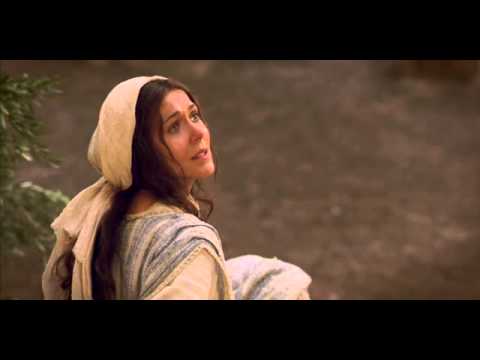
A Christmas Meditation: Mary the mother of Jesus


A Christmas Meditation

Mary the mother of Jesus


We can easily become over-familiar with the Christmas story and forget how amazing it is.

Take Mary, for example. We don’t know how old she was when Jesus was born. All we know is that she was a young woman. In the culture of the Middle East at that time, people married very young. Mary was probably a teenager when the angel came to her, and she may have been as young as 14.

It’s not surprising that when the angel came to her and greeted her –  “Greetings, you who are highly favoured! The Lord is with you!” – that she was greatly troubled. But she was a feisty young woman and when the angel told her she was going to have a baby, instead of stunned silence, she said, “How will this be, since I am a virgin?”

Mary was relieved that Joseph went ahead and married her – there was huge shame about being an unmarried mother in those days. Joseph would have been within his rights to break off their betrothal when he found out that Mary was pregnant. But the Bible says that he was a righteous man and did not want to expose her to public disgrace. While he was wondering what to do, an angel appeared to him in a dream and reassured him that the baby Mary was carrying had been conceived by the Holy Spirit and that he should not be afraid to marry her.

And then when Mary was obviously pregnant there was the trek to Bethlehem. The Bible tells us that the ruling Roman Emperor – Caesar Augustus – had decided to carry out a census of the whole Roman world. (That was probably to make it easier for his administrators to gather tax!) Everyone had to go to their home town and that meant that Joseph, who was descended from King David, had to go to Bethlehem – King David’s ancestral home. Now in all our nativity stories and plays, Mary rides on a donkey. It has to be said that the Bible makes no mention of a donkey. We have to hope, for Mary’s sake, that Joseph was wealthy enough to own a donkey.

Our nativity stories have Mary giving birth to Jesus in a stable because there was no room in any of the inns. And a superficial reading of the Bible suggests that is true. But in all probability they would have stayed with Joseph’s relatives. The word that traditionally is translated “inn” is better translated as “guest room”. Peasant houses in that part of the world were very simple (and still are today) – there would have been a large communal room, where the family cooked and where the animals were kept overnight. There would have been a smaller room, probably upstairs, where the family slept and, if they could afford it, there would also have been a small guest room. It seems that all of Joseph’s relatives had been overwhelmed with family members coming for the census and all their guest rooms were full. Joseph and Mary had to make do with sleeping in the main room along with all the animals, and it was here that Jesus was born, and so he was put in the manger – or animal feeding trough. We can think of it as Jesus entering the world in extreme poverty. But another way to look at it is that it is all very ordinary – it could have happened to any peasant family.

But the next thing that happened was far from ordinary. That same night a bunch of smelly shepherds turned up to see Jesus, gabbling some story about angels coming to them in the fields on the hills near Bethlehem and telling them that the Messiah – who had been eagerly awaited by the Jews for centuries – had just been born in Bethlehem. Mary wondered what to make of all this and she remembered all that had happened and often thought about it and tried to make sense of it all.

On the eighth day, when Jesus was circumcised, he was given the name Jesus. (Actually he wasn’t – the Jewish name he was given sound more like Yeshua. ‘Jesus’ is the Greek equivalent. Greek was the language that was widely spoken around the Mediterranean area; a bit like English is spoken around the world today.) Jesus – or Yeshua – means “he saves”, or Saviour, and it’s the name that the angel said that he should be called.

Now the Jewish law says that “every firstborn male is be consecrated to the Lord” and because Bethlehem is near Jerusalem, Mary and Joseph were able to take the baby Jesus and present him at the Temple. Because they were poor, and couldn’t afford a lamb or goat, they made an offering of a pair of doves.

There were two odd characters in the Temple. They were both old and they were both very godly, and God spoke to them. The first was a man called Simeon who lived in Jerusalem. God had told him that he wouldn’t die until he had seen the Messiah. When Mary and Joseph were at the Temple with Jesus, the Holy Spirt prompted Simeon to go to the Temple. When he saw Jesus, he knew that he was the Messiah, so he took the baby Jesus into his arms and said:

“Sovereign lord, as you have promised,
          you may now dismiss your servant in peace.
For my eyes have seen your salvation,
          which you have prepared in the sight of all nations:
a light for revelation to the Gentiles,
          and the glory of your people Israel.”

And then Simeon said to Mary: “This child is destined to cause the falling and rising of many in Israel, and to be a sign that is spoken against, so that the thoughts of many hearts will be revealed. And a sword will pierce your own soul too.”

The second was a woman called Anna. The Bible calls her a prophetess. We would probably call her a religious fanatic. She was 84 years old. She had been widowed after just 7 years of married life and she had devoted herself to prayer. She never left the Temple precincts, day or night, and she often fasted. She immediately recognised that Jesus was the Messiah and told everyone in the Temple who would listen.

There was another time when Jesus went to the temple.  Every year Jesus’ parents went to Jerusalem for the Festival of the Passover.  When he was twelve years old, they went up to the festival, as usual.  After the festival was over, while his parents were returning home, Jesus stayed behind in Jerusalem, but his parents didn’t know. They thought he was in the party that they had travelled with, so they went on for a day. Then they began looking for him among their relatives and friends. When they couldn’t find him, they went back to Jerusalem to look for him. After three days they found him in the temple courts, sitting among the teachers, listening to them and asking them questions. Everyone who heard him was amazed at his understanding.  When his parents saw him, they were astonished. Mary said to him, “Son, why have you treated us like this? Your father and I have been anxiously searching for you.”

“Why were you searching for me?” he asked. “Didn’t you know I had to be in my Father’s house?”

Again, Mary wondered what to make of it all. She could see that Jesus was not an ordinary child, but she didn’t know what would happen later in his life.

Now at this point, we have to say that we don’t know what happened to Joseph. The Bible doesn’t mention him again after the incident in Jerusalem. We can only assume that he died – people often died young and sometimes older men married younger women and died some years before them. The Bible does tell us that Mary and Joseph had other children after Jesus: that Jesus had brothers and sisters.

What we do know is that Mary had to decide how to relate to Jesus as he started his ministry and healed people and taught large crowds.

Early on in Jesus’s ministry, Mary was invited along with Jesus and some of his disciples to a wedding. In fact in was the first recorded miracle that Jesus did, and Mary was involved.  The wine ran out and everyone was embarrassed. Mary knew that Jesus could do something about it but Jesus didn’t want to be bounced into starting to do miracles too soon. Nevertheless, Mary persisted. “Do whatever he tells you,” she said to the servants. Jesus told the servants to fill six massive jars with water and the water miraculously turned into wine – gallons and gallons of it. Very good wine at that. So much so that the master of ceremonies commented to the bridegroom that he had saved the best wine until the end.

On one occasion it seems that Mary and Jesus’s brothers had decided that Jesus had gone too far: that he was putting his health in danger because he was too busy to eat, or that he was letting his popularity go to his head. Either way, they came to take him home. But they couldn’t get inside the house where Jesus was teaching because of the crowd. They sent a message in to Jesus that they were outside waiting, but Jesus ignored them and carried on, so they went home empty-handed.

By the time that Jesus died on the cross, Mary had become one of his followers. We don’t know what happened to change her mind . But we do know that when Jesus died on the cross, Mary was there, with the other women who followed him, a short distance away, watching Jesus die. And we do know that Mary went with the other woman to the tomb where Jesus’s body had been laid, intending to put sweet-smelling spices on his body, only to find that the tomb was empty because Jesus had risen to life.

Mary had travelled a journey, even harder than the one from Nazareth to Bethlehem when she was pregnant. She had travelled the journey from being someone who pondered about all the things that she saw and heard to being someone who was a devoted follower of Jesus.

And that is the challenge that faces us today. We may ponder within us all that we have heard about Jesus. We may consider ourselves to be a spiritual person. But are we willing to make that transition, like Mary did, into someone who is fully devoted to Jesus and to following him wherever it takes us?

Wednesday, April 08, 2015

We Belong to the Land


We Belong to the Land:

the story of a Palestinian Israeli who lives for peace and reconciliation


by Elias Chacour and Mary E. Jensen


This is the story of Elias Chacour, a Melkite Catholic priest, and his ministry in the small Galilee village of Ibillin and beyond.
Reading this book, three things become very quickly apparent about Elias Chacour –
    1)   his passionate love for Jesus,
    2)   his love for the Palestinian people,
    3)   his desire to see the Jewish and
    Arab people reconciled.
Woven together through this book are the story of Elias Chacour’s life and the story of the Palestinian people. Elias Checour was born to a Palestinian Christian family in the village of Biram in Upper Galilee in 1939. Along with his whole village he experienced the tragedy of eviction by the Israeli authorities in 1948 and became a refugee in his own land. He and all his family members became citizens of Israel when the state was created.
In 1965, Father Chacour was ordained and appointed as priest of St. George Melkite Catholic Church in Ibillin. Father Chacour realised early on that his work in Ibillin would require more than routine priestly duties. He knew that the only way for Palestinian people to flourish was through education. Through his efforts and leadership, a pre-school, a village library and a secondary school were set up to serve the children of the village.
His vision was that through education, children and young adults of different faith traditions – Christian, Muslim, Jewish and Druze – should learn to live and work together in peace. He has traveled around the world with this message and, alongside the secondary school, a peace centre was built in Ibillin for international visitors to stay and join in this ministry.
This book is a reminder that there is an ancient Christian church in the Middle East. Although for many Christian Arabs their faith may be nominal and inherited, for many their faith is living and vibrant. The outward form may appear archaic and formal to those of us who are more used to a “modern” or informal expression of our faith. Nevertheless, for many their devotion to Jesus and understanding of his teaching is beyond question.

Jesus is the one


Jesus is The One.

He is the one who existed with God the Father from before the beginning of time.

He is the one whose human existence started not from the sperm of a human father, but by the activity of the Holy Spirit.

He is the one whose mother was a virgin when he was born.

He is the one who lived and experienced a real human life.

He is the one who lived a perfect human life without sin or failure.

He is the one who shows us exactly what God the Father is like.

He is the one whose teaching is perfect and without fault.

He is the one who paid the penalty of human sin.

He is the one who bore the pain of human suffering.

He is the one who overcame the power of human selfishness.

He is the one who conquered death.

He is the one who rose to life from the grave.

He is the one who returned triumphant to God the Father.

He is the one who poured out the Holy Spirit on his followers.

He is the one who now rules and reigns with God the Father.

He is the one who knows and understands what it is like to be human.

He is the one who prays for me constantly.

He is the one who pleads my cause with the Father.

Jesus is The One.

Friday, February 20, 2015

Deep Church Rising: Rediscovering the Roots of Christian Orthodoxy


Deep Church Rising: Rediscovering the Roots of Christian Orthodoxy

by Andrew G. Walker and Robin A. Parry

I found this to be a very thought-provoking and challenging book. Walker and Parry argue the case for what they call ‘deep church’. This is similar to what C. S. Lewis described as ‘mere’ Christianity. By this they mean the basic, historic Christian faith that has been believed and practised by Christians throughout the centuries. This includes a straightforward belief in Jesus as described in the Bible – that he was conceived through the activity of the Holy Spirit, his mother was a virgin before his birth, his birth was accompanied by highly unusual events, he performed miracles, he died for us so that we can be forgiven, he rose from the dead, and he will return at some point in the future and will judge all humankind. Along with this goes an acceptance of the Bible as being inspired by God and authoritative for life and salvation. This is the Christian faith set out in the historic Christian creeds.
Walker and Parry contrast this orthodox Christianity with the liberal questioning of the fundamentals of faith which has been common currency in the wider church for a century or two. They use the term “the third schism”. The first schism was the split between the Roman Catholic Church in the West and the Eastern Orthodox Church which occurred in the eleventh century. The second schism was the split between Roman Catholics and Protestants arising from the Reformation in the sixteenth century. The third schism, they say, is the divide between those who believe in the orthodox core of the Christian faith, as expressed in the historic creeds, and those who do not. They argue for unity among all those who hold to the orthodox core of the Christian faith, whether they be evangelical Protestants, traditional Anglicans, Roman Catholic or Eastern Orthodox. This means those who, as the (fairly) new Archbishop of Canterbury Justin Welby says of himself, “say the creed without crossing my fingers at any point.”

Walker and Parry examine the role that the church plays in interpreting the Bible. The slogan of the Reformation was “sola scriptura”. This means that each Christian is free before God to interpret the Bible as he (or she) sees fit. The result has been the fragmentation of the Protestant church so that there are now literally hundreds of Christian denominations and groups, each believing that their version of the truth is the right one. In contrast, both the Roman Catholic Church and Eastern Orthodox Church maintain their unity because the Bible is interpreted in a particular way by those who are authorised by the Church to be teachers. We have to admit even within Evangelicalism the important role of the Bible teacher in giving an authoritative interpretation of scripture. Although in theory each believer is free to understand and interpret the Bible for themselves, and there are a wide variety of views about all sorts of things within the Evangelical world, nevertheless there is a boundary beyond which it is not acceptable to go. The question is, how do we determine what is acceptable deviation from the truth and what is not? And how do we decide who it is that determines? What has tended to happen is that when someone has been called to account by others for their deviant understandings of the Bible, they have gone off and started a new church.
The challenge to evangelicals is whether we are prepared to see as our allies those whom we have traditionally seen as our enemies – Anglo-Catholics, Roman Catholics, Eastern Orthodox. Where do we draw the ‘battle lines’? Which issues do we regard as fundamental and which are secondary? This boils down to the question, who do I count as a fellow Christian? Who is my brother and my sister?

A good place to look for an answer is in the Evangelical Alliance’s Evangelical Relationships Commitment
1.       We welcome as Christian brothers and sisters all who experience the grace of new birth, bringing them to that fear and knowledge of God which is expressed in a life of obedience to His word.
2.       We recognise our Christian duty of trust and mutual encouragement to all who serve Christ as Lord, not least to those who conscientiously prefer not to be identified with the same churches, alliances or councils as ourselves.
3.       We respect the diversity of culture, experience and doctrinal understanding that God grants to His people, and acknowledge that some differences over issues not essential to salvation may well remain until the end of time.

It seems clear to me that this commitment means embracing as Christian brothers and sisters many who in the past we have regarded as being ‘beyond the pale’. Those people who we have dismissed as being ‘nominal Christians’, who we have thought of as at best ‘sub-standard’ Christians, or even as not true Christians at all.
The Apostle Paul writes warmly to the church at Corinth, commending them and thanking God for the evidence of God’s life working in and through them. Nevertheless, as we see from Paul’s letters, the church was riven by divisions, tolerated immorality, promoted social elitism at the Communion table, and even included those that doubted the truth of the resurrection. At no point does Paul question the reality of their life in Christ – although he does warn them that their faith is in vain if Christ was not raised from the dead! He regards them as brothers and sisters who need encouragement and correction. I suspect that if we saw such belief and behaviour in any of our churches, we would encourage – or compel – the people concerned to leave the church.

I will finish by quoting from Genesis 4, out of context, “Where is your brother?” The answer is probably in the local parish church, the black-majority Pentecostal church, the Roman Catholic church, the Methodist church, or even the Eastern Orthodox church.